Mothahood

by Susan Kravet

Author: mothahood

  • Covid-19 is Making My Sons Mensches

    Here is my latest essay for Kveller

    This Yiddish Word Describes How My Sons Have Changed During Coronavirus

    My cell phone rang and I saw a pic of my eldest son appear on the screen. I resisted the urge to yell, “WHAT’S WRONG!?” and answered with an apprehensive, “Hi?”.

    “Mom, do I need a bench scraper?” he asked. I checked again to see if it was a wrong number. This one rarely called unless it was a medical emergency and besides, it was 8 a.m. — hours before the time he normally wakes on a weekend. Considering that he usually eats food right out of a takeout container, I was shocked that he knew the name of this obscure kitchen item. 

    But I realized things were different now. Thanks to Covid-19, everyone seems to be anxious and turning into insomniacs  — conditions that are somewhat ameliorated by stress-eating. With restaurants closed and only limited take-out availability during this prolonged quarantine, people are getting creative about cooking, and learning to be resourceful, to boot. I was surprised and proud that my son was actually preparing his own meals, even if I also worried if this was a sign of the apocalypse. 

    When my husband and I came down with the virus in early March — one after the other — we took turns caring for each other through fevers, cough, chills (him), and a debilitating headache, sore throat and loss of smell (me). My two 20-something sons had to shelter in place in their apartments — one five blocks south of our home in New York City and the other 15 blocks east. They were each living alone, having recently moved into their own places without roommates for the first time. 

    I worried more about them than I did myself, as I had prepared by freezing copious amounts of homemade chicken soup and turkey meatballs. I was concerned that they’d run out of food, as others were stockpiling and the grocery store shelves were already emptied of pasta, frozen foods, and all paper goods. I urged them to prepare but they waved me off.  

    Before Covid-19 put us all under house arrest, my boys rarely had food in their fridge other than a few IPAs, a Brita pitcher, and ketchup. But suddenly they were lining up at Whole Foods to stock their pantries. They were sending me shots of their bounty and asking me how to cook and store their stash. And they weren’t asking Google — they were relying on ME!  

    I knew things had really changed when my younger son FaceTimed me to debate the pros and cons of different grill pans. Up until the pandemic, this kid had been surviving on dinners delivered by GrubHub and Seamless, expensed to his office.

    I grew up with a father who liked to putter in the kitchen. He made salami and eggs for his three daughters every weekend. Now 95, he still makes pancakes for my boys when we visit. My hubby has never made food for our kids, not as much as a PB&J sandwich. He’s just not interested. His dad wasn’t much of a cook, either. 

    I tried to break this cycle and bought my kids a PlaySkool kitchen when they were toddlers, but they just used the faux produce for epic food fights. I enjoyed cooking for them, trying new recipes, baking my legendary zucchini bread and preparing abundant Thanksgiving dinners and Jewish holiday meals. I always hoped they’d join me in the kitchen to help. But they preferred sharing different interests with their dad like football, golf, and rock music.

    I cooked much less after they left for college, but during these months stuck at home I was back wearing my chef’s apron. Now, finally, it was my turn to share my passion — these phone calls about gastronomy were finally in an area I was skilled at. At last, I was the one they wanted to consult with! Truthfully, I’d been envious of the moms who were posting Instagram pics of mother/daughter baking during this crisis, posing with their homemade breads and cookies. I felt like I was missing out. 

    But now, I’m emailing my sons recipes, and they are showing me pictures of perfectly grilled salmon, sesame crusted tuna, and steak, all seared on the grill pans I happily shipped them.  There was a quesadilla competition between them and one mastered my chicken cutlets — one of their favorites.

    I am grateful my kids are older — I can’t imagine having to homeschool children during this time.  I don’t think I would have survived. And yet, I amdoing distance learning with my sons. Forget Master Class! They have me — an expert in stain removal, laundry, cooking, and wall patching. I know how long deli meat lasts in fridge, the difference between percale and sateen sheets, and what temperature to use for any type of laundry, although I sometimes secretly use Google as a reference before I give my expert advice. I am so thankful for this time to continue teaching them these life lessons. I thought it was too late. 

    The Yiddish word balaboosta refers to a woman who runs a warm, comforting home. Without a masculine substitute (balaboosto?) for that word I will just have to say that my boys are becoming mensches. They call more often and offer to do our food shopping so we can avoid public places. They follow the stay-at-home orders and work from home with little complaining. They even phone their grandparents to check on them during this stressful time — without me telling them to.

    My boys are facing this strange predicament armed with grill pans, baking sheets, and, yes, even a bench scraper. More significantly, however, they’re proving that they are well equipped with the skills of patience, persistence, planning, and practice  — attributes that are needed for cooking, yes, but also for life in general. They are often choosing to stay in and cook, instead of accepting my offer for food drop-offs or a home-cooked meal.  

    The other day, one asked me for the mandelbrot recipe that was passed from my grandmother to my mother to me. I used it as bait. “It’s too hard to make,” I told him. “You’ll have to come here and watch me.”

    “I know, Mom. It’s just manipulation so I hang out with you but that’s fine, I enjoy that,” he replied. 

    Yes, my boys may be growing up, but I still have work to do around here. The other day, as I was cooking my millionth quarantine meal, I asked my husband to pass me the olive oil. He looked at me questioningly. I rolled my eyes and pointed to the bottle — which is directly next to the coffee pods he’s reached for every day for the last 7 years. It seems this stay-at-home order could last a while longer yet — perhaps it’s not too late to get him trained, too. 

  • Keeping Covid Fit With My 5-Inch Personal Trainer

    When my NYC gym closed in March due to Covid-19 I figured the break was a sign to relax. Heck, my grandmother lived to 98 and she never lifted more than a six-pound brisket. After the WHO rudely placed me in the “Older People” category, (at 61!) I sat on the couch surfing Netflix, stress-eating salted caramels and Trader Joe’s peanut butter pretzels. For a couple of weeks I binged on My 600-lb Life which should have scared me into starvation mode but weirdly made me want to eat even more. I had to remind myself that we were aiming to Flatten the Curve, not fatten the curves.

    Wearing athleisure 24/7 didn’t motivate me even as my iPhone showed my screen time was up 50 percent and I walked 287 steps that day compared to my usual 7400. I hoped all the cleaning and vacuuming I was doing would count for something.
    Then I realized I was more than tired. I was exhausted. My lingering scratchy throat escalated along with debilitating headaches, loss of smell and a cough. I had little energy to do anything more than change the channels with the remote. Instead of a virtual workout, I had a virtual visit with my doctor, who diagnosed “the virus”. As friends were posting their neighborhood strolls on Instagram, I just longed to take a walk other than the one from my bed to the couch without getting breathless. The only sweat I produced was from a fever of 102.

    After an anxious week, with a 2-hour trip to the ER followed by the purchase of a pulse-oximeter to help differentiate between levels of panic and oxygen, I recovered. I was eager to get healthy and strong and get my pulse racing for the right reasons. I started with some pre-taped classes, but I burned most of my calories jumping up to move my iPad from the floor to the dresser each time the instructor switched to a standing position. I banged my leg on the footboard and spent too much time fixated on a stain on the carpet.

    A younger tech-savvy gym buddy did a spreadsheet of live Zoom classes so we could support our favorite instructors and stay connected. I signed in for a Barre class with Kimber (rhymes with limber). Wearing reading glasses while working out was a challenge, but it helped to see the shrunken image of my instructor and get a better peek into everyone’s personal spaces. I waved to the tiny squares with Ali and her baby in NC, Gail in NYC and Alex, back in London with her toddler and puppy. In preparation for a Yoga class with Mike, I even changed out of the Lululemon leggings I’d been wearing for three straight days. I spread out my sky-blue mat, which had been delivered by Amazon and apparently deemed an essential item. I prayed no one would notice the bra I had hastily flung on the floor while changing and hustling to Venmo my on-screen miniature instructor.

    Finally I broke down and hopped on the Peloton planted in the middle of our extra bedroom. I admit that I was peeved when my husband bought it last year and intruded on my esthetics. But as I pedaled, an eight-inch, perfect ten instructor with a six-pack and a playlist shouted at me to get in shape. Now it’s the only way to get my heart rate up besides an episode of Homeland.
    With some help from my millennial aged son I figured out how to watch classes with an almost life-size person on some SmartTV apps, however I don’t always get sound. And sometimes that person freezes in the middle of downward dog.

    There are plenty of challenges. But I’m making it work. I woke with twinges in my thighs and muscle cramps in my butt yesterday. But this time I wasn’t concerned – I had earned them.

  • QUARANTINED AT “GOOGLE HOME”

    I wrote this conversation with my Google Home last week when we both still had a sense of humor. Wish I hadn’t smashed it with a hammer – didn’t know I’d be in desperate need of conversation!
    Hey Google: What is the weather today? The weather is cloudy with a high chance of virus.

    Well, I have to brave the food stores in search of garlic and toilet paper, so I guess I’ll substitute a mask for an umbrella.

    Hey Google: What kind of mask will protect me from contracting the Coronavirus? A face mask will not protect you from the virus. And good luck finding one – they are very trendy and all sold out due to hoarding. Even for health care providers. Perhaps I can suggest an anti-stress facial mask from Sephora, but you’ll have to order it online, they are closed.

    Hey Google: I’ve been to every CVS, Rite Aid and Walgreens in a 10-block radius for a precious bottle of hand sanitizer. Will alcohol work just as well? Yes, you can substitute rubbing alcohol mixed with aloe vera gel, but drinking a shot of Tito’s might be way more beneficial at this point.

    Hey Google: I had to cancel a trip to Florida for my father’s 95th birthday last week? Was that the right choice? Yes. It would be a danger for him and besides, the only thing worse than contracting the virus would be a 14-day quarantine in your parents’ Independent Living facility.

    Hey Google: I’m worried about them… how do I check in and teach them to do a Zoom party? The only worse thing than the virus and getting stuck in Florida would be teaching your technologically disabled parents to learn Zoom.

    Hey Google: Well now I’m worried about my sons too. Does quarantine at home mean they can’t come for dinner? Sorry, I don’t know what you mean. You want to cook and clean for two more people? If you are asking is it okay to social distance your children, don’t feel guilty, they have done it to you since they left for college.

    Hey Google: Well, since we are home, my husband wants to watch March Madness. When is that? Every day this March Is Madness.

    Hey Google: I meant when is the NCAA March Madness?Where have you been? NCAA March Madness has been cancelled. NBA games have been cancelled.MLB is ceasing play. NHL games have been suspended. Olympics have been postponed. Life as we know it has been cancelled, postponed, disappeared…

    Hey Google: What the heck?! I’M GOING TO DISNEYWORLD! DisneyWorld is closed. I know. I was kidding. It was a sports reference. Now I don’t feel great and I’m actually getting worried.

    Hey Google: What are the symptoms of Coronavirus?….NO RESPONSE

    Hey Google: What are the symptoms of Covid-19?……. NO RESPONSE

    Hey Google: Why aren’t you responding? Sorry, I don’t want to get a computer virus so I’m practicing social distancing. But the symptoms are a sore throat, fever, cough and chills.

    Hey Google: What if I just have a mild fever and no cough? You may have the Corona-Lite virus.

    Hey Google: Don’t be funny – this is serious. People are losing their jobs, their savings, their security and health. These are scary times. Do you think laughter is truly the best medicine? On the website Psychiatrictimes.com they say in the 1300s a professor of surgery propagated post-operative therapy with humor. Ok I’ll try that…

    Hey Google: What are the funniest shows on Netflix? One website lists The Good Place, VEEP, and Atlanta as the three funniest shows on TV, but you might prefer the films Contagion, Pandemic, Outbreak or World War Z.

    You’re stressing me out. And I’m so bored I already redid my closet and organized the food in my pantry. Hey Google: How many Weight Watcher points are in a bag of Trader Joe peanut butter pretzels and a sleeve of Thin Mints? Aren’t you depressed enough? They said “flatten the curve” not “fatten”.

    Hey Google: Seriously, I’m 61, how worried should I be about my risks of Coronavirus? The outbreak poses health risks for everyone, but the elderly are particularly vulnerable.

    Hey Google: At what age is a person considered elderly? (more…)

  • Girls Playing Cards Drinking Coffee…and Rosé

    Excited to share my first piece for The Girlfriend, a fun weekly newsletter for women over 40 from AARP

    https://www.thegirlfriend.com/girls-playing-cards-drinking-coffee-and-wine

    I was on my phone making plans with a friend.  I hesitated before I blurted out the embarrassing truth.

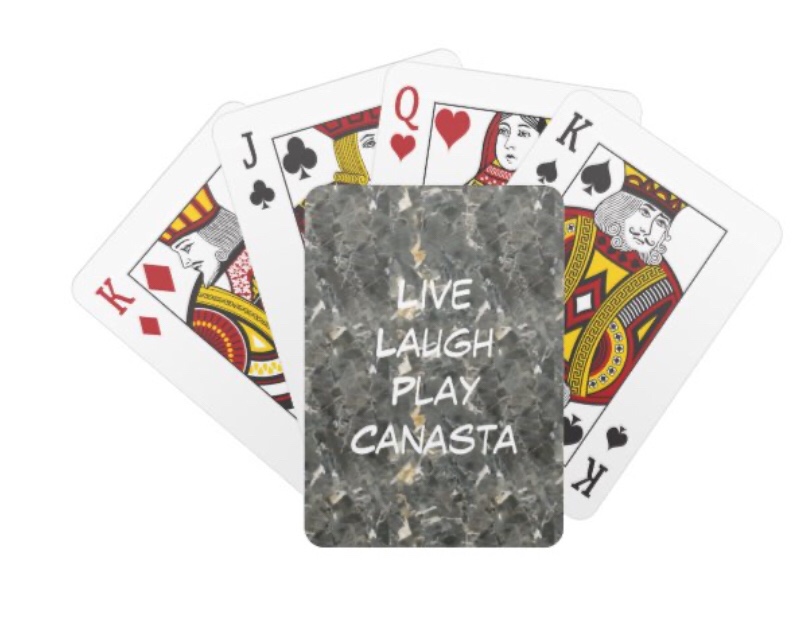
    “I can’t make it Wednesday I’m playing canasta.” 

     I thought to myself – have I turned into my Grandmother?  I hadn’t even become my mother yet! Grandma Alice had a weekly card game in her Jackson Heights apartment. I remember sleepovers there where I’d watch her play with her best friend Hannah and “the girls”. Since then I’d always considered Canasta a game for older Jewish ladies. I never pictured myself the type who sat around playing cards in the afternoon. But then again, I hadn’t reconciled that I had become middle-aged.

     When my friends and I became empty nesters, with the good fortune to be retired or have flexible work schedules, some started playing Mahjong. That had been my mother’s game as she sat outside clicking tiles at the pool club in her oversized Jackie O sunglasses. Picture Mrs. Maisel, complete with a cabana boy serving iced tea. I was too modern for that. I volunteered, went to galleries, did some freelance work. I was too busy to sit around for hours playing games. 

     Then I got pressured to play bridge. It sounded intellectual.  “It’s good for your brain,” was the selling point as friends tried to recruit me. My cerebrum did need exercise — it was a bit scary that I occasionally forgot words, or my phone, or my kids’ names. I signed up for lessons with friends at the local community center. How hard could it be? Truthfully, it was very hard. Our group was the youngest by ten years, but that didn’t give us the advantage. We were frustrated, confused, and got tired of being shushed by the “grownups”. We were tripped up by the tricks, and the North-South, East-West partnerships only made us lose direction. Clearly, our minds needed an easier work-out. Lori, a member of our remedial bridge group was simultaneously learning canasta.

    ”It’s easier, and more fun than bridge,” she promised, and offered to teach us.

     I didn’t want to add to my card confusion. One game was enough – we became bridge drop-outs and served as guinea pigs for our fledgling instructor. We sarcastically pronounced it ca-NAY-sta, with a heavy NY accent, like our grandmothers, making it sound even more ethnic. Wondering how it got that name, I checked Wikipedia, learning that canasta is Spanish for basket, and it was actually devised by two Uruguayan men in 1939.  I hoped I wouldn’t become a “basket case” trying to learn new rules. Fortunately, I got it. Yes, there were melds and rules, and special hands you needed to remember.  And you had to count Aces and 7’s and I often ran out of fingers and memory.  But I didn’t need Canasta for Dummies. I’d say it was halfway on the difficulty scale between Go Fish and Bridge. Besides, there were snacks, AND you could chat and gossip and no-one gave you the side-eye.

    Canasta was the most popular American game in the early 1950’s, according to bicyclecards.com. The game was even mentioned  in The Catcher in the Rye.  It’s obviously experiencing a resurgence.  There’s a Canasta League of America –their mission proclaimed on their website is to “popularize and standardize the game we love”, since the rules have changed.  There’s a Canasta Junction app that has many friends addicted, and I have spied people playing it on the subway, though I have refrained.  Our “Canasta Masta” tutor has now taught over 100 students and many of her newest pupils are youngers — stay-at-home moms or working moms who want night lessons.  My own informal survey, taken while visiting assisted living facilities in Florida with my elderly parents, confirms that it’s still quite popular with the silver haired ladies. But it’s obvious that it’s not just your grandmother’s game.  

    When Alice moved from Queens to Manhattan I was in my 20’s and I lived ten blocks away.  Her game continued with new cronies and I often helped her set up her table, which she kept under the bed. She’d put out a bowl of fruit, and a cut-crystal candy dish of Brach’s chocolate bridge mix. She placed a bottle of Welch’s grape juice on the buffet, and added a spritz of soda from the green and blue glass seltzer bottles delivered to her apartment in a wooden case. 

    Our growing group now plays weekly.  We prefer Rosé or fancy sparkling water in bright cans. In place of bridge mix we indulge in dark chocolate, gluten free snacks, and sushi. My canasta tray is decorated, with a matching $100 table cover and personalized score pads. But we still play with the old-fashioned red and blue Bicycle cards that I remember on my granny’s table.  

    I don’t know if my brain is stronger or my memory has improved. It definitely takes some concentrating keeping track of what cards have been discarded.  I occasionally get some aerobic exercise when my heart races waiting for one card to get a special hand.  I’m starting to feel less defensive about admitting to my new past-time. My grandmother probably wasn’t much older than me when she started her game. She’d raised five children and didn’t apologize for anything.  Hoda Kotb and guest host Maria Shriver recently dedicated an entire Today show to talking about the benefits of The Slow Movement in a culture that’s obsessed with speed. These days when life moves at a quicker pace, conversations are reduced to texts, and there’s shame in not being constantly busy, our game is a good opportunity to set aside a few hours a week to slow down, talk face to face, and develop new friendships. 

    My grandmother’s game ended when she moved down to Florida after a stroke. She passed away seven years ago. I may never make the move south, but at least I’d be prepared.  It may be a different game than it was when she started playing, but some things haven’t changed.  I think of my sweet Grandmother and her friends as I pull my square card table from under the bed, and sitting around it, I am reminded that life comes full circle.

  • My Parents Will Be Spending Eternity in a Costco urn. (KVELLER)

    https://www.kveller.com/my-jewish-parents-chose-their-final-resting-place-an-urn-from-costco/

    In an episode of  The Kominsky Method  on Netflix, Sandy and Norman, played by Michael Douglas and Alan Arkin, planned a funeral for Norman’s deceased wife, who’d specified a coffin made of driftwood, or timber from a sunken ship. 

    Fortunately, my elderly parents’ requirements were way simpler: They wanted an urn from Costco.

    In spring of last year, I received an email from my mother with a picture of a burial urn from their website. Apparently, Costco really sells everything! “What do you think of this?” she asked. 

    Thankfully, I inherited my sense of humor from my witty mom. So I emailed her back a potential shopping list: mango peach salsa, three-pack of Centrum Silver vitamins, Kirkland bran cereal, burial urns. 

    That was that, but a few months later, when my mother, Rita, 86, and my father, Allen, 93, visited New York to celebrate my 60th birthday, they spent the day with my older sister, Lisa, and me. Sitting in Taboonette, a tiny Middle Eastern restaurant, they broached the topic again.

    “So, we want to talk about what happens when one of us dies,” my mother announced. 

    I glanced at my sister, giggling nervously while tahini dripped between my fingers. She had just taken a picture of our folks. “Can I post this on Facebook?” Lisa asked. “Caption: Sitting at lunch in the West Village while discussing my parents’ demise.” 

    In the book Let’s Talk About Death (Over Dinner) by Michael Hebb, he encourages people to have a meal with family to discuss your wishes about how you want to spend your last days. My parents chose lunch over dinner, skipped the appetizers, and went right to their funerals. 

    I’m very comfortable with denial, so I didn’t want to think about any of this. My father’s sister had made it to 100, and three maternal grandparents lived into their late 90s. My parents are in good health and both look younger than they are. Notably, they also lack the “Jewish Guilt” gene — this particular conversation bomb wasn’t intended to worry my sister and me. Rather, it was a typically protective act: They would never want to leave us with an unpleasant job. 

    Sitting in the cafe, my parents wanted specific plans, not sarcasm. No one in our family had been cremated before, since Jewish custom prohibited desecrating the human body. In our family, when someone died, the burial was arranged within the customary two days, and then we ate deli and sat shiva for a week. But my parents — more practical than religious — had already decided on cremation. 

    My mother asked our opinion where the service should be. I tried not to assume which parent would be the surviving one alone in Florida, where they have lived full-time for five years, after 25 years of being snowbirds from New Jersey. I was unable to imagine one without the other. 

    “We can do it in New York,” my mother suggested. “We’ve bought a cremation plan. It’s extra for the rabbi, but we don’t need one.”

    “All those years of Hebrew School and Yom Kippur services and now you don’t even want a rabbi?” I joked. But I was only half kidding — I realized that this was a situation where I actually wanted clergy. 

    I thought how strange it would be to have a service with no casket. I questioned what we’d do with the ashes. “Who will keep the urns in their homes?” I asked.

    “None of you, it wouldn’t match the furniture,” my mother answered. “Besides, Dad wants the honor of being buried at Arlington. We can be there together.” Dad, after being a World War II war hero with a purple heart, silver star, and other medals, spent his entire career in the Army Civilian Service. We were all proud of that, so Lisa and I promised we’d bring the urns to Washington, D.C. for interment after they both were gone. 

    Joking had always been the way our family got through difficult events, and since our youngest sister, Meredith, was absent, I knew we’d turn this into a good story for her. Yet our lighthearted banter over lunch masked deep discomfort: I didn’t want to “try on” the pain of losing my mom and dad. Though I am a mother to grown sons, I still spoke to my parents daily. I still felt the shield of being treasured and cared for. I knew I was fortunate to have both my mother and father at 60, yet I noticed things were changing. I snapped at my mother when I had to repeat something she didn’t hear. I was impatient with her walking at a slow pace. My dad napped often.

    Five months after their visit, when they were back in Florida, I got a call: They’d been in a horrific car accident. Their car flipped, and so did their lives. My mother broke her ribs and her spine; my father fractured his pelvis, eight ribs, and needed chest surgery. They spent their first time apart in 20 years in separate trauma units. I flew down immediately, guilty that I could have lost them and hadn’t visited them since their trip to New York. 

    I bounced between hospital rooms in shock. Miraculously, my mother was released after several days, while my dad was sent to recuperate in rehab. Now, it was my turn to be the adult: I cooked meals, arranged for aides, dealt with car insurance, drove them to doctors, called about hospital bills, and installed an “I’ve Fallen and Can’t Get Up” alarm. 

    Yes, we already had the funeral talk, but we hadn’t considered the years in between. Now we needed to discuss finances, disability coverage, and possibly the most difficult subject of all: the car keys. With their Hyundai totaled and their health declining, they agreed to hold off on driving for the time being. I didn’t know if revealing how worried I was about them would make them feel loved, or more afraid. My mother’s post-crash fragility gutted me. Now I understood that no amount of planning or denial would ease the anguish of losing a parent. I was anxious about being so far away, imagining getting THE CALL. I hid in their garage sobbing. 

    I didn’t want her to see how exhausted and stressed I was. But when I came inside with my face puffy and red, there was no hiding it. It was difficult for her to accept the help when she was used to giving it. 

    “I must have done something right,” my mother said, as I helped her into bed that night. 

    “You did everything right,” I replied. 

    After days of being a caregiver, my parents’ health improved enough for me to leave. I got back to New York, and my mother called the next morning. “Hello, darling daughter. Are you home safe?” 

    “Yes, don’t worry about me,” I said. “I’ll be back in a few weeks. I’ll be visiting often.”

    “I can’t thank you enough for what you did here. I know it’s hard for you to come but we won’t be able to travel anymore,” my mother said. “I’m glad we got to go to D.C. last year for the family reunion. I guess that was our last time.”

    “That’s not true,” I said, pausing for a beat. “I’ll be bringing you there in an urn.” 

    “You’re bad,” she said, cracking up. I didn’t need to verbalize how I felt about her and my dad — they already knew. So instead, I communicated in the vernacular of our family: I made her laugh. 

  • I had ambivalent feelings about an impending empty nest — here’s my essay about it on a great site – The Woolfer.

    UNHINGED

    “You’re losing it,” my friend Lori said. “I think you need help.”

    She was right. I was driving friends and family crazy with my obsessive behavior when they staged this mini-intervention four years ago. It wasn’t a dangerous situation.  I wasn’t drinking too much or using prescription painkillers.  What caused them to question my mental state was an inability to make up my mind on a simple decision. 

     I recalled this predicament as I recently binge-watched the charming Israeli show Shtisel, on Netflix, about a Haredi family in an Ultra-Orthodox community in Jerusalem. I was struck by how the characters kissed the mezuzah each time they entered or exited a room.  As a Jewish mother, I hung mezuzas on our doorposts but I wasn’t attentive to their symbolism as I passed through during my crisis.  I had a less divine focus.  I was fixated on the door knobs.  
    I was unraveled in a spiral of indecisiveness.  It began when I decided to fix-up our aging house. My husband and I had been in the house for over 20 years – moving there from NYC when our sons were toddlers. Now they were grown and the youngest was graduating college. My boys were only two years older than the house, but while they’d grown more independent, the house acted like it was still in the terrible twos — demanding time, money and lots of care and attention. I had grown up too. My knees creaked about as much as the floorboards did, and I didn’t want to take care of kids OR the house anymore. I could barely keep up with my own maintenance. If we were going to spend money on a facelift, it was going to be on my 56-year-old face, and not a center hall colonial. 
    The entry hall had cracks in the ceiling, wood rot ate at the doorframes, the kitchen needed some new curtains and every room needed a coat of paint. If we ever wanted to sell it we’d have to maintain it. When a friend and real estate broker mentioned that new door handles were an easy upgrade I thought it would be a quick fix. Shiny new knobs had been known to freshen up old gals before so off I went to the hardware store. 
    Easy fix? It was not quite as simple as I hoped. Who knew there were so many choices? There were handles, levers, round knobs, egg knobs and so many finishes. There were hinges that needed to be matched. For a perfectionist like me who perseverated over details this was overwhelming. A salesman at Gracious Home helped me pick a classic style and went to get the order form but he would have needed a degree in abnormal psychology to get me to make the deposit. I went back to the store until I saw him run and hide the fourth time I showed up. When I thought he might call the Bellevue psych ward I went to other stores where I could start fresh. I stared at doors everywhere I went. I asked friends to take pictures of their door handles. I nearly fell off the Pilates reformer as I took a class and stared at the handles of the classroom door instead of my feet. My husband thought I was insane asking him his opinion on something he cared little about. I literally began dreaming of knobs. I couldn’t sleep. I was stuck. I was becoming unhinged. 
     I knew I should have been able to get a grip on this handle problem.  Fortuitously I had an appointment with my internist for a routine physical. She asked how I was. I mentioned my eldest son was working in New York City and the other had graduated and would be moving to Chicago. Unexpectedly, I burst into tears. That’s when it hit me. 
    All this obsessing about handles and hinges — it was never about that. I was deeply emotional about the doors that were closing on a parenting chapter, as my youngest son was about to embark on his own life. I was sad about the once locked doors to their now abandoned bedrooms — where mezuzahs bought on a family trip to Israel were hung with pride. Now they were museums of their childhood, filled with stuffed bears, class trip souvenirs and ephemera. This condition was about the entry to the basement where they played with toy cars and Legos before graduating to video games and contraband beer bottles during high school. 
    I had dreamed of the time when the house would be quiet and clean and I would have freedom and time,yet when it was close I was surprised by my ambivalence about it. I missed the energy and noise that made the house alive. I missed the fridge door opening to shelves full of food and snacks, instead of only water bottles and condiments. When the boys came home they were only visiting. I felt like the proprietor of an empty inn. 
    Once I got a grip and knew I wasn’t going crazy I felt unburdened. I listened to my youngest jam on his guitar in his room and I enjoyed the soundtrack as I reflected on their childhood. A few weeks later he packed up his Fender and took it on the plane to the Windy City.  Those empty rooms were a testament to a job well done. Whether we were in the same house or across the country, we would always be a family. 
    It was time for me to start a new phase too.  I changed the curtains. I had the walls painted. I traveled to the places on my bucket list – Africa, Cuba, Italy.  I volunteered at a hospital.  I started writing again. 
    Now I drive past the bus stop and don’t recognize the younger families who recently moved to the neighborhood to raise their kids. People ask if we will to stay or move to the city.  I’m leaving the doors open on that. The ones with the shiny new polished nickel handles that I finally picked out.   


    https://thewoolfer.com/2019/03/20/empty-nest/

  • A Visit from CPS Changed How I Parented My Teens – Grown and Flown

    Grown and Flown is a wonderful website and blog about parenting older kids.  In this essay I wrote about a frightening visit from DYFS and how it changed my parenting style

    A VISIT FROM CHILD PROTECTIVE SERVICES CHANGED HOW I PARENTED MY TEENS

    https://grownandflown.com/visit-child-protective-services/