When I spoke to my father last November, we got disconnected before I said goodbye. I figured I’d talk to him the next day. That afternoon, I visited an Indian artist whose paintings explored family legacy and deep connections to her roots. I left thinking about the threads that tie us to our past, coming from a Jewish family that also emigrated. Just before midnight my aunt called.
”Honey, your Dad died.”
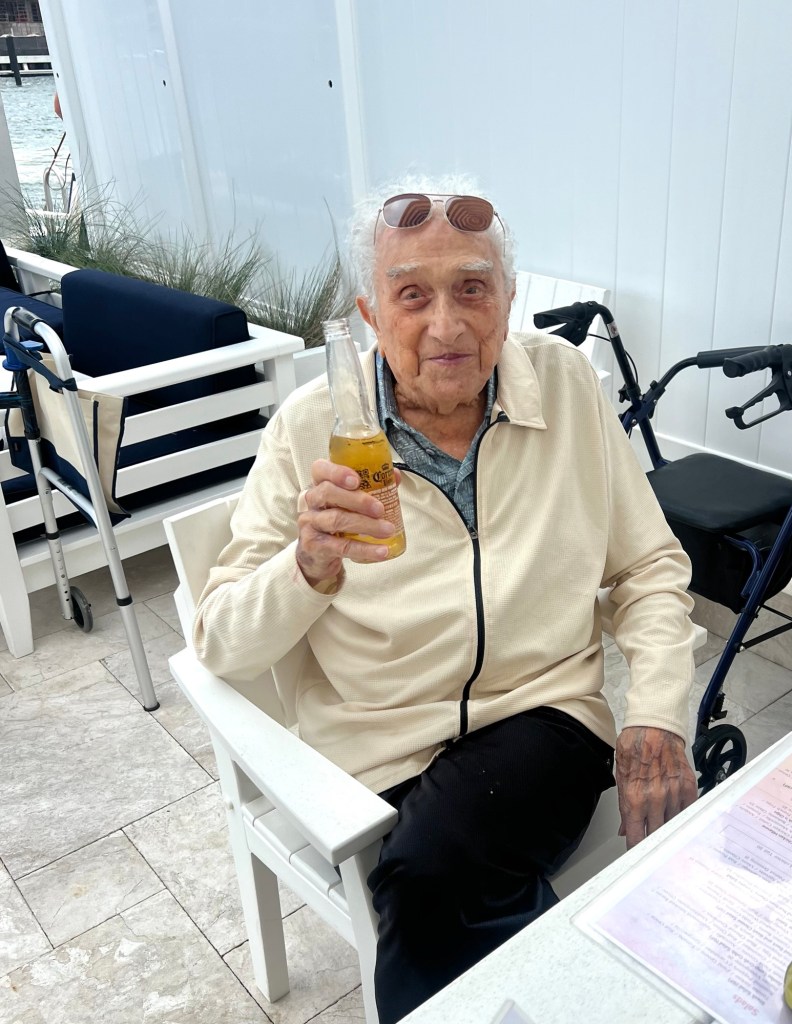
We had celebrated my dad’s 100th birthday eight months prior, so while I wasn’t surprised, I was stunned by how visceral my reaction was. My heart physically ached as I sobbed and packed for the first flight to West Palm Beach the next morning. I am not deeply religious nor do I have a firm belief in heaven. Still, as the plane climbed through the clouds, I imagined myself rising nearer to his spirit. I opened my Kindle app and started a new book, LOOK CLOSER, and as it loaded I noticed the dedication … To my beautiful Susan. Was I looking for meaning in a random coincidence? Perhaps. But a bit later the first answer in the mini crossword was Ken Ken – a passion of my father, and upon landing I spotted a man in the “racing red” Ferrari t-shirt that my Dad often wore. I was certainly feeling a connection to something. Maybe loss makes you notice things you’d normally ignore. I wanted to believe it was not random.
When I reached my parents’ unit in their independent living community, an older man was sitting in my dad’s favorite chair. My heart skipped a beat for a second before I recognized his best friend. I hugged my mom who was uncharacteristically quiet and deeply sad. Some people stress-eat. I clean. It was so strange to me that one day a person is alive and the next day you’re throwing out their comb and toothbrush. I photographed his clothes before folding them into donation piles – a mix of striped shirts, polo shirts and vintage knit Coogi sweaters. I washed his favorite white Izod cardigan and laid it on his chair, where it still remains.
There were arrangements to take care of but I felt frozen. We knew my parents had chosen cremation, and I was busy dealing with the funeral home, filling out forms, fielding calls, and writing an obituary. But cremation is not the traditional choice for a Jewish family, especially one that had Yiddish speaking grandparents who had Kosher homes. Without the familiar rhythm of a quick burial followed by Shiva we had no roadmap. Should we have a service in Florida? Or temporarily bring my 93 year old mom up north as planned despite her resistance to leave the place where every room still held traces of my father. I was so overwhelmed that after a spectacular meltdown on the phone with my older sister, she booked the next flight down. We couldn’t seem more different but nature and nurture had bonded us with our own shorthand. Once we were together we were conspiring like we had as teenagers, laughing and crying and working out how to make arrangements that would make everyone comfortable.
Together we organized a simple memorial for their friends and local family in their building. Our younger sister flew in with just a few hours notice. We shared stories about our dad, my sister read a secular poem, his friends took turns telling us how much they admired him, while our husbands and children watched over zoom. Afterwards, people told us it was moving and beautiful. We thought it was lovely. But it still felt incomplete. None of us are particularly religious. Yet I found myself craving rites – familiar words and customs that we had observed for most of our lives. There’s a reason every culture has a ritual for life’s milestones…after a death it gives mourners structure and guidelines so they know what to do when they are heartbroken and need to make so many important decisions.
Once we convinced our mother a change of scenery would be good for all of us, we went online ordering a blood pressure monitor, a wheelchair and a shower grab bar. But the more pressing need wasn’t medical. It was finding a Rabbi. The temple I had planned to use was booked, so my living room was chosen as the venue. Then began what I now refer to as The Great Rabbi Hunt. Five people recommended by friends were unavailable, doing everything from singing gigs to weddings. I was googling rent-a-Rabbis the way people scroll dating apps, making snap judgements and being picky. Too formal. Too much beard. Too old. My father, who used to hide a sci-fi novel in a prayer book during our bat mitzvah prep would have had a lot to say about some of the choices. I was getting so desperate my sister stopped me from approaching an older Hasidic man at the airport who was also headed to NY.
“You are not recruiting a rabbi from Gate B12”, she laughed.
My mother was firm that we didn’t need anyone at all. The three of us disagreed. Finally, a friend suggested someone she and her the Upper East Side friends have in their contacts as “Hot Rabbi.” I was slightly embarrassed to call … it felt like an episode of the Netflix show Nobody Wants This.
I admit, I put on a little makeup before our Zoom meeting. He introduced himself by name, I’ll call him Josh for purposes of anonymity…and I told him about my wonderful father – the war hero who made the best pancakes, grew beautiful red roses, and danced with my mom in the kitchen when a favorite song came on. He lived in a house with all girls, even our dog was female, but made sure to teach us to be strong and independent, to catch fish and shoot a BB gun and use tools. Rabbi Josh listened patiently. He was definitely cute, but by the end of the conversation I knew he was more than that. It was “bashert”…or destined.
The small simple service took place with close friends, cousins, and our families. We made speeches, we heard stories, the rabbi performed some short prayers, and when he tore the small piece of black cloth that is traditionally worn during a mourning period, I felt a deep connection to our heritage and shed tears remembering all the times I’d seen it performed at other Jewish funerals. We ate the deli platters people had sent, my mom got to see her family and meet our friends,and I breathed a sigh of relief when it was over. We could start existing in this new reality.
I think my dad would have approved. I still don’t know what happens when we die, whether those early signs were just a coincidence, but I do know that ritual carried us when we were floundering. It gave three daughters and a broken hearted widow a way to honor the man who had lived for a century and was a source of unconditional love for our entire lives.
My father’s cobalt blue urn sits in the den on a table next to his chair and sweater, surrounded by family pictures. My mom kisses it or speaks to him as she passes. Someday my sisters and I will carry both our parents to Arlington, honoring his wishes.
For now he’s home. When he visits in my dreams he doesn’t look 100. He is smiling and handsome — the way I want to remember him. Strong yet gentle, stern (like our surname) but affectionate. I wake up missing him, but grateful that love, customs and ritual, have provided me with comfort that will last beyond his lifetime.


Leave a Reply